


List of Family Names Mentioned in the Collection
Sorted by Alphabetical Order
A
-
Achard de Bonvouloir Ref 277
-
Acton of Aldenham Ref 232
-
Adhemar de Montfalcon (d') Ref 258
-
Adey Ref 304
-
Affry de La Monnoye (d') Ref 264
-
Agard de Rouméjoux Ref 4
-
Agie de Selsaeten Ref 144
-
Alberghini Ref 285
-
Alberi Ref 284
-
Albert de Roquevaux (d') Ref 31
-
Aminoff Ref 348
-
André (d') Ref 86
-
Andréossy (d') Ref 242
-
Antalóczy Ref 326
-
Arbuthnot Ref 297
-
Argouges (d') Ref 180
-
Arnauld Ref 95
-
Artaud de La Ferrière Ref 82
-
Abourg de Boury Ref 357
-
Aulmont de Verrières Ref 111
-
Auzanet de Bauvaire Ref 29
-
Avout (d') Ref 198
-
Aymer de La Chevalerie Ref 6
-
A — Ancestry
Every antique seal is a trace of ancestry. Behind each impression in wax stands a family, a lineage, and a story carried across generations. These seals preserve not only names and arms, but also the memory of those who once bore them with pride.

B
-
Badáni Ref 275
-
Bailly (de) Ref 34
-
Balathier (de) Ref 229
-
Banne d'Avéjan (de) Ref 64
-
Barde Ref 46
-
Beaucorps (de) Ref 70
-
Beaudrap (de) Ref 239
-
Belhomme de Franqueville Ref 254
-
Béraudière (de la) Ref 168
-
Bessuéjouls (de) Ref 244
-
Béziade (de) Ref 2
-
Bicher Ref 302
-
Birti von Lavarone Ref 114
-
Bischoff Ref 319
-
Bleyfuesz Ref 48
-
Blondeau Ref 223
-
Bochart de Saron Ref 291
-
Böcklin von Böcklinsau Ref 366
-
Bodart Ref 317
-
Bohun of Midhurst Ref 222
-
Boisbaudry (du) Ref 307
-
Bonnault (de) Ref 162
-
Boscal de Réals de Mornac Ref 266
-
Boscary de Villepaine Ref 205
-
Bouchard de Florac Ref 369
-
Bouhelier Ref 300
-
Bouillonney de la Boutonnière (du) Ref 220
-
Buissy (de) Ref 261
-
Bourdin d’Assy Ref 152
-
Bourdeau du Mas Ref 59
-
Bourgogne (de) Ref 352
-
Bourguignon du Perré Ref 283
-
Bouthillier de Chavigny Ref 361
-
Boyle Ref 52
-
Boys d'Hautussac de Pravieux (du) Ref 193
-
Braganza Ref 289
-
Brandner Ref 245
-
Brentano Ref 313
-
Breteuil (de) Ref 222
-
Briey (de) Ref 109
-
Brisay (de) Ref 334
-
Broch d'Hotelans Ref 361
-
Brumauld Ref 156
-
Buller Ref 268
-
B — Baronial Estates
From ancient castles to country manors, noble families shaped the landscapes around them. Their seals authenticated letters, charters, and agreements, serving as symbols of authority rooted in land, tradition, and responsibility.


C
-
Cais de Pierlas Ref 32
-
Calmels d’Artensac Ref 15
-
Camusat de Riancey Ref 224
-
Canneel Ref 322
-
Capialbi Ref 71
-
Capitani da Vimercate (de) Ref 58
-
Capriol de Saint-Hilaire (de) Ref 87
-
Casotti Ref 329
-
Castain de Guerin Ref 287
-
Caze (de) Ref 1
-
Chambge de Liessart (du) Ref 160
-
Chaponay (de) Ref 228
-
Charlotte of Belgium Ref 102
-
Chavigny (de) Ref 246
-
Chievres (de) Ref 6
-
Cioia Ref 280
-
Claparède Ref 54
-
Clermont-Tonnerre (de) Ref 273
-
Cognet des Gouttes Ref 299
-
Colas-Brouville de Malmusse Ref 350
-
Collemont (de) Ref 298
-
Combles (de) Ref 351
-
Conflans (de) Ref 230
-
Constantin (de) Ref 219
-
Corbet of Moreton Corbet Ref 105
-
Cornulier (de) Ref 39
-
Corone (du) Ref 200
-
Couaridou (de) Ref 69
-
Coucault Ref 199
-
Courtarvel (de) Ref 303
-
Croix de Beaurepos (de la) Ref 307
-
Crozé de Clesmes (de) Ref 159
-
Crussol d'Uzès (de) Ref 187
-
Csák von Uray Ref 310
-
Cugnon d'Alincourt (de) Ref 165
-
C — Castles
For centuries, castles stood as the visible heart of noble families. Within their walls, alliances were forged, inheritances secured, and traditions preserved. Many of the seals presented here once travelled far beyond those ancestral homes.


D
D — Duty
Nobility was often accompanied by duty. Whether serving in royal courts, commanding regiments, or administering estates, generations of noble families were expected to balance privilege with service.

E
E — Etiquette
The noble world was governed by customs and traditions as much as by laws. Courtesy, honour, and etiquette shaped social life at every level. Manners and education reflected a family’s place within the society.

F
F — Falconry
Among the favourite pursuits of European nobility, falconry united sport, skill, and tradition. Across centuries, noble men and women trained birds of prey as symbols of refinement, patience, and aristocratic culture.

G
-
Gaillard, lord of Charentonneau Ref 239
-
Garnier de Falletans Ref 13
-
Gayant Ref 5
-
Geldern-Egmond zu Arcen Ref 325
-
Gerard Ref 335
-
Gigault de Bellefonds Ref 360
-
Girard (de) Ref 36
-
Girard du Demaine (de) Ref 178
-
Godard d’Aucourt Ref 68
-
Godefroy Ref 347
-
Goffin Ref 186
-
Goltz (von der) Ref 128
-
Gombault de Razac (de) Ref 354
-
Gorrevod Ref 233
-
Grabinstaden Ref 328
-
Gradl Ref 76
-
Grasset (de) Ref 65
-
Grave (de) Ref 117
-
Grocholski Ref 337
-
Grubb Ref 304
-
Gudin Ref 56
-
Guéau de Gravelle de Reverseaux Ref 306
-
Gueulluy de Rumigny (de) Ref 298
-
Guevara Ref 270
-
Guigue de Champvans Ref 231
-
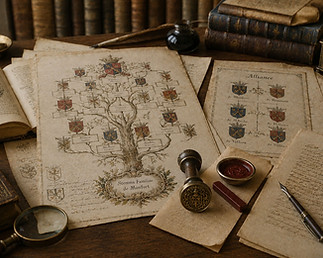
G — Genealogy
Each seal opens a door to genealogy. A name engraved in stone, ivory, silver, or steel can lead to centuries of family history, revealing alliances, inheritances, and connections that shaped the course of generations.
H
-
Habsburg-Lorraine Ref 42
-
Haldimand Ref 79
-
Hall (van) Ref 97
-
Haller Ref 267
-
Hamel (du) Ref 16
-
Hammes Ref 296
-
Härdtl (von) Ref 174
-
Hartmann von Wynau Ref 85
-
Hauteville Ref 167
-
Hepworth Ref 94
-
Herbert Ref 232
-
Hertogenbosch Ref 296
-
Heywood Ref 335
-
Hibon LaFresnoye Ref 134
-
Hieronymi (von) Ref 368
-
Howard Ref 335
-
Hüe de Miromenil Ref 60
-
Hunter Ref 335
-
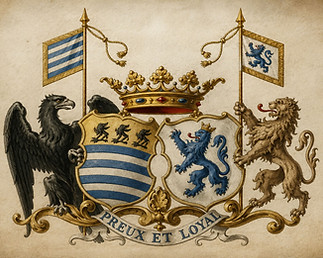
H — Heraldry
Heraldry is a language written in colours, symbols, and tradition. Coats of arms told stories long before modern records existed. The seals in this collection preserve that heraldic heritage in its most personal form.
I

I — Ivory
Many of the finest seals were carved from ivory, prized for its beauty and delicate workmanship. These small objects combined artistry and function, transforming everyday correspondence into an expression of identity and status.

J
J — Journeys
Seals travelled wherever their owners went. They crossed mountains, seas, and frontiers attached to letters, passports, and official documents. Today they remain silent witnesses to centuries of movement and exchange.

K
K — Knights
The ideals of knighthood influenced noble society long after the medieval age had passed. Courage, loyalty, and honour remained enduring virtues, celebrated in family traditions and often reflected in heraldic emblems.

L
-
Laage (de) Ref 84
-
Lacger-Camplong (de) Ref 293
-
La Condamine (de) Ref 264
-
Lada Ref 339
-
La Fare (de) Ref 64
-
La Fitte (de) Ref 292
-
Laire d'Espagny (de) Ref 312
-
Lalaing (de) Ref 240
-
La Roche-Fontenilles (de) Ref 210
-
Lastic (de) Ref 189
-
La Tour du Pin (de) Ref 349
-
Laumond Ref 347
-
Le Bertre Ref 161
-
Le Bret Ref 316
-
Le Duc de Lillers Ref 103
-
Le Fèbvre Ref 73
-
Le Gendre Ref 333
-
Le Grelle Ref 144
-
Leiningen (von) Ref 172
-
Le Lasseur Ref 278
-
Lemaire de Marne Ref 312
-
Le Masson de Surmont Ref 351
-
Lenoir Ref 204
-
Le Nornant Ref 363
-
Le Roy Ref 206
-
Le Vaillant du Châtelet et de Jollain Ref 208
-
Le Vaillant Ref 236
-
Lévézou de Vézins Ref 75
-
Leyx de Nussanne Ref 43
-
Lowther Ref 78
-
Loyac (de) Ref 168
-
Loynes du Houlley (de) Ref 180
-
Lullin Ref 127
-
L — Libraries
Many noble houses assembled remarkable libraries, preserving manuscripts, maps, and family archives. These collections safeguarded memory and learning, much as heraldic seals safeguarded identity and authenticity.


M
-
Mahony (O') Ref 13
-
Maillé (de) Ref 182
-
Mailly-Nesle (de) Ref 331
-
Mairhofen (von) Ref 41
-
Mancini-Mazarini Ref 318
-
Mangold Ref 11
-
Manner zu Mätzelsdorff (von) Ref 53
-
Maria II of Portugal Ref 289
-
Mathieu de Vienne Ref 330
-
Matraini Ref 329
-
Maublan Ref 96
-
Maublanc de Chiseuil Ref 40
-
Maximilian I of Mexico Ref 102
-
Mecquenem (de) Ref 259
-
Mengen Ref 25
-
Merceron Ref 159
-
Mévius (de) Ref 80
-
Millon de Montherlant Ref 265
-
Missolz (de) Ref 30
-
Mohl (von) Ref 121
-
Monge Ref 37
-
Montozon (de) Ref 282
-
Muelen (van der) Ref 124
-
Muiron (de Saint Julien) Ref 332
-
Musiel (de) Ref 207
-
M — Manors
Beyond the grandeur of castles, countless noble families lived in manor houses surrounded by fields, forests, and villages. Their seals reflect a world where family, land, and local influence were closely intertwined.


O
O — Orders
Membership in an order of chivalry was among the highest distinctions a noble could receive. Decorations, collars, and insignia often appeared alongside coats of arms, proclaiming loyalty and honourable service.

P
-
Pajot de Juvisy de Montferrand Ref 185
-
Panouse (de la) Ref 291
-
Pasek Ref 129
-
Pavillon Ref 294
-
Payen Ref 250
-
Percy Ref 346
-
Perrey (de) Ref 198
-
Perrin-Brassac (de) Ref 293
-
Perrot de Thannberg Ref 327
-
Phya Sridhamasasana Ref 93
-
Pierres (de) Ref 90
-
Pigenot (von) Ref 249
-
Pocquelin Ref 229
-
Pócz Ref 281
-
Ponsort (de) Ref 179
-
Pré (du) Ref 197
-
Prie (de) Ref 211
-
Privat de Fressenel Ref 177
-
Prus Ref 339
-
Puy (du) Ref 184
-
P — Power
Seals were instruments of power. A simple impression in wax could validate treaties, confirm property rights, or authorize important decisions. Their authority rested not in their size, but in the trust they inspired.

Q
-
No entry

Q — Quiet Dignity
Not every noble family sought fame. Many lived lives of quiet dignity, serving their communities and preserving traditions across generations. Their seals remind us that history is often shaped away from the spotlight.

R
-
Raguenel Ref 27
-
Raimond de Mormoiron (de) Ref 99
-
Rainer zu Harbach Ref 131
-
Rangone Ref 169
-
Ranzow (van) Ref 286
-
Reinhart zu Thurnfels Ref 146
-
Reding von Biberegg (von) Ref 142
-
Reibold (von) Ref 11
-
Reininghaus Ref 66
-
Reiset (de) Ref 347
-
Reynaud de Bologne de Lascours Ref 86
-
Riedl Ref 353
-
Rieu (du) Ref 16
-
Risi Ref 243
-
Robertson of Kindeace Ref 107
-
Rocher du Quengo (du) Ref 201
-
Roll-Montpellier (de) Ref 139
-
Rosen (de) Ref 203
-
Rouchet de Chazotte (du) Ref 30
-
Rourke (O') Ref 253
-
Ruel d’Omonville (du) Ref 196
-
Rufflay (du) Ref 203
-
Ruty Ref 47
-
R — Royal Courts
For centuries, royal courts attracted noble families from across Europe. There, influence was gained, alliances arranged, and fortunes made. Countless letters sealed with family arms passed through these centres of power.

S
-
Sain de Bois-le-Comte Ref 181
-
Saisseval (de) Ref 355
-
Saisy de Kerampuil (de) Ref 145
-
Salme (de) Ref 320
-
Salmon (de) Ref 215
-
Saltykov Ref 99
-
Sandys Ref 336
-
Santa Maria Ref 308
-
Santoll Ref 26
-
Savoy-Carignan Ref 42
-
Schack (von) Ref 358
-
Schaumburg-Lippe Ref 108
-
Schreitter von Schwarzenfeld Ref 202
-
Schüle (von) Ref 214
-
Secondat de Montesquieu (de) Ref 340
-
Senneterre (de) Ref 230
-
Senneville (de) Ref 117
-
Seuberlich Ref 314
-
Sforza di Santa Fiora Ref 151
-
Simony (de) Ref 351
-
Sonis (de) Ref 185
-
Spaun (von) Ref 3
-
Spoelberch Ref 49
-
Stendten (von) Ref 132
-
Straten (van der) Ref 104
-
Suardi Ref 309
-
Sulzer Ref 141
-
Syrokomla Ref 337
-
Szikszay of Szikszó and Debreczen Ref 234
-
S — Seals
A seal is more than an object. It is a signature, a symbol, and a fragment of history. Every impression represents a moment when a family chose to leave its mark upon the world.

T
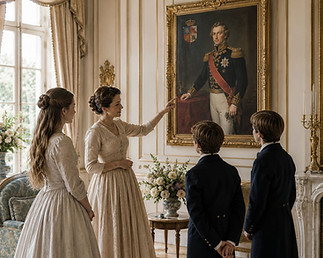
T — Tradition
Traditions gave continuity to noble life. Coats of arms, family mottos, ancestral portraits, and heraldic seals connected one generation to the next, preserving a sense of identity through changing times.
U
-
No entry

U — Unity
Families endured through unity. Across centuries, marriages, alliances, and shared responsibilities strengthened noble houses and ensured the preservation of their heritage. Their seals often reflected that collective identity.

V
-
Valentin (de) Ref 149
-
Vane Ref 78
-
Vargas Ref 270
-
Varnod Ref 356
-
Vassal (de) Ref 72
-
Vauquelin (de) Ref 164
-
Veeren (van) Ref 213
-
Vera de Aragón Ref 270
-
Vercellone Ref 44
-
Verheyen Ref 157
-
Vernimmen Ref 9
-
Vétillart du Ribert Ref 248
-
Vilar-Reynalt (de) Ref 212
-
Villatte d'Outremont Ref 215
-
Vincent de Vaugelas Ref 73
-
Vivien Ref 119
-
V — Virtue
Heraldry frequently celebrated virtues such as loyalty, courage, wisdom, and perseverance. Whether expressed through mottos or symbols, these ideals reflected the qualities that families hoped to embody and transmit.

W
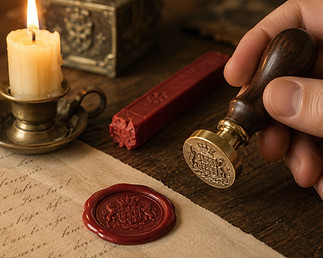
W — Wax
Wax transformed a seal into a statement of authority. Pressed into warm wax, engraved arms emerged with remarkable clarity. These fragile impressions carried legal, personal, and symbolic significance across generations.
X
-
No entry

X — Unknown Stories
Some seals preserve mysteries still waiting to be solved. Their owners may be forgotten, their histories incomplete. Yet each unidentified seal invites new discoveries and reminds us how much remains hidden in the past.

Y
-
Y de Résigny (d') Ref 36
-
Y — Years
The passage of years gives antique seals their fascination. They have survived wars, revolutions, inheritances, and changing fashions, carrying with them traces of the people and families who once relied upon them.

Z

Z — Zenith
The final letter of the alphabet marks not an ending, but a culmination. Like a seal impressed in wax, every family leaves an enduring trace. Together, these stories form a rich panorama of Europe's noble heritage.


Gerry's Collection of Antique Seal Stamps.