

House of Drummond
Earls and Dukes of Perth and Melfort


Drummond of Melfort, cadet branch of the Drummond family
The Drummond of Melfort branch was founded by John Drummond (1649–1715), the younger brother of James Drummond, 4th Earl and 1st Jacobite Duke of Perth. John Drummond was created Viscount of Melfort in 1685, Earl of Melfort in 1686 (in the peerage of Scotland), and later Duke of Melfort in the Jacobite peerage by the exiled King James II of England and VII of Scotland in 1692. This made the Melfort line a cadet but ducal Jacobite peerage line, loyal to the exiled Stuart (Stewart) monarchy.

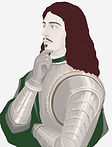
John Drummond, 1st Earl of Melfort, styled Duke of Melfort in the Jacobite peerage
(8 August 1650 – 25 January 1715)
The Melfort family followed the Stuarts into exile in France and were naturalized as French nobles.
The House of Stuart (also spelled Stewart) was the royal dynasty that ruled Scotland from 1371 and later England and Ireland from 1603 to 1714. They include monarchs such as James IV of Scotland (1603–1625), Charles I, who was executed in 1649, and James II of England (VII of Scotland), deposed in 1688.
James II of England (VII of Scotland) was a Catholic monarch in a Protestant country. In 1688, during the Glorious Revolution, he was deposed by his Protestant son-in-law William of Orange and fled to France under the protection of King Louis XIV. From that point on, the Stuarts and their supporters formed a "Jacobite" court in exile (from Jacobus, Latin for James), centered in Saint-Germain-en-Laye, near Paris.
The Drummond family were fervent Jacobites. John Drummond, the younger brother of the Earl of Perth, was one of King James II’s most loyal ministers. He was made Secretary of State for Scotland, Viscount of Melfort in 1685, Earl of Melfort in 1686, and eventually Duke of Melfort (in the Jacobite peerage) in 1692 by the exiled King James II.
John Drummond was the central figure of the exile. He had multiple children with two wives. His children and grandchildren remained in France, intermarried with French noble families, and were recognized as naturalized French nobility. For instance, his son Louis Drummond (1675–1766) was Marquis de Melfort in French nobility. Jacques-Louis Drummond (1750–1800), Duke of Melfort, was born in Avignon, within the Papal States, but later lived in France and emigrated to Spain during the French Revolution. This branch of the family came to be known as Drummond de Melfort.

James Drummond, 4th Earl of Perth.

Annabella Drummond, Queen of Scots, wearing a heraldic Drummond dress.

The House of Drummond and the senior branches of the family.
The House of Drummond traces its ancestry to Maurice Drummond, a Hungarian nobleman who is said to have arrived in Scotland in the 11th century with Queen Margaret (later Saint Margaret), the wife of King Malcolm III. While this origin is partly legendary, the Drummonds appear securely in historical records from the 13th century. The name “Drummond” likely derives from the Gaelic dromainn, meaning a ridge, referencing their lands in Perthshire.
The Drummonds built and held several major castles and estates.
Drummond Castle (Perthshire) was the ancestral seat of the family since the 15th century. The estate is renowned for its stunning formal terraced gardens, described as the best example of their kind in Scotland. The castle itself, originally built around 1490, has been significantly restored and remodeled over the centuries. The lands of Drummond were the property of the Drummond family from the 14th century, and the original tower house was built over several years by John Drummond, 1st Lord Drummond of Cargill, from about 1490. In 1605 the 4th Lord Drummond was created Earl of Perth, and added to the castle. John Drummond, 2nd Earl of Perth, laid out the first terraced garden around the castle in the 1630s.
Other estates of the Drummond family included Innerpeffray (early medieval seat), Cargill (branch of the family), and the Stobhall Castle (connected via marriage).
Relationship with the Monarchy.
The Drummonds were loyal royalists, closely tied to the Scottish crown for centuries.
Among the most notable and influential members of the family was Annabella Drummond (c. 1350 – 1401), best known as the Queen Consort of Robert III of Scotland. Born into the powerful House of Drummond, she married Prince John Stuart (Stewart) (later Robert III) around 1367, solidifying her family's close ties to the royal house. As queen, she was a figure of dignity and influence, known for her intelligence and strong character. Her marriage helped strengthen the Drummonds' political standing, and through her, the family became directly linked to the royal lineage. She gave birth to James I of Scotland, who would eventually reign after a turbulent regency and years of English captivity.
Annabella played an active role in court politics, particularly during the reign of her husband. She was seen as a stabilizing force during a time of internal strife and noble factionalism. Her legacy endured through the Stewart dynasty, and her marriage marked a defining moment in the rise of the Drummond family to national prominence.
James Drummond, 4th Earl of Perth and 1st Jacobite Duke of Perth (1648–1716), was a pivotal figure in late Stuart political history, serving as a steadfast supporter of King James VII of Scotland (James II of England) during a period of intense religious and dynastic upheaval. As a prominent Catholic convert and Lord Chancellor of Scotland, Drummond played a key role in advancing James VII’s efforts to promote religious tolerance and restore Catholic influence in the kingdom, policies that alienated much of the Protestant nobility. Following the Glorious Revolution of 1688, Drummond remained loyal to the deposed king, joining him in exile in France and becoming a central figure in the Jacobite court at Saint-Germain-en-Laye. For his unwavering loyalty, James II created him Duke of Perth in the Jacobite peerage in 1701. Drummond’s influence helped sustain the legitimacy and ceremonial structure of the Stuart claim to the throne in exile, symbolizing the enduring alliance between certain Scottish noble houses and the Stuart monarchy even after its deposition.
John Drummond, 1st Earl of Melfort (1649–1715), was one of the most important and controversial Scottish statesmen in the service of King James VII of Scotland (James II of England). As the king’s close confidant and Secretary of State for Scotland, Melfort became a leading architect of royal policy during the final years of James’s reign. A convert to Catholicism like his elder brother, the Earl of Perth, Melfort was a zealous supporter of the king’s pro-Catholic reforms and an outspoken advocate for the absolute authority of the monarch. His rigid and often uncompromising stance, especially in pushing for religious tolerance and resisting calls for moderation, contributed to the alienation of key Protestant allies and hastened the collapse of James’s rule during the Glorious Revolution of 1688. After James's deposition, Melfort followed him into exile in France, where he became a central figure in the Jacobite court at Saint-Germain-en-Laye. Elevated to Duke of Melfort in the Jacobite peerage, he acted as James’s chief advisor and minister-in-exile, continuing to advocate absolutist principles and resisting compromise with the Protestant establishment. His influence on the exiled Stuart court was significant - though often divisive - and he helped preserve the ceremonial and dynastic identity of the Jacobite cause. While admired for his loyalty, Melfort’s rigid ideology and unyielding counsel ultimately limited opportunities for reconciliation between the exiled monarchy and Britain, making him both a key pillar of Stuart legitimacy and a symbol of its political isolation.
Historically, the Drummonds were wealthy landowners in Perthshire, with significant revenue from agriculture and tenantry. After the Jacobite defeats, their estates were forfeited, though some were restored in the late 18th century. In the 19th century, the family regained prominence and wealth through careful estate management and royal favour under Queen Victoria. The Drummond family today continues to hold land and historical titles, though largely ceremonial, with the Earl of Perth and other branches still represented in the UK.


.jpg)


Gerry's Collection of Antique Seal Stamps.